


えー、最近めっきり更新のないこのコミュですが、
私はやっとこマハンの「海軍戦略」を入手して読んでおります。
現在、Essential Atlasなどで十分な資料が手に入るのが、クローン大戦、銀河内乱期となっており、
また、帝国を中心として歴史を見た場合、共和国後期からペレオン=ギャブリソム協定(つまりは、ユージャン・ヴォング登場まで)を一つの時代として区切ることが出来るのではないかと思われ、この時代の戦争を、「海軍戦略」をベースとして読み解いていこうと考えております。
もちろん、シス戦争、ヴォング、スターク・ハイパースペース戦争など、検証すべき先例は多いかと思いますが、圧倒的に銀河内乱時代の資料が多いので、この時代が中心になります。
とりあえず、彼の主張する「位置取り」と「内線」を考えてハイパースペース航路を眺めれば、
コルサント(というよりAnnex、ブレンタールなどコア)は、全て銀河周縁の拠点に対する中心位置を占め、ここを抑えればあらゆる方面に内線作戦を行うことが出来るという、非常に有利な拠点であることが理解できます。
まあ、こんな感じで、思索メモ、ブレインストーミングの場としてご利用ください。
|
|
|
|
コメント(6)
ウンターは、SWの宇宙戦闘、ことに、惑星攻略を理論化した人物であり、「Approach, Orbit, Invasion, Control」
の4つの段階を考え出した人物です。
彼の理論についてもまた訳しますが、まずは、彼の経歴から
マイケル・ウンター
マイケル・ウンターは帝国宇宙軍の士官であり、20年間の前線勤務の後、アカデミーでも尊敬を集める教官となった。
経歴
特権階級の両親の下に生まれたウンターは、反抗的な性格を押さえつけるために軍に入れられた。アカデミー卒業後、彼は家族のコネでストライク級巡航艦の艦長の地位を得たが、後には彼の勇敢な性格のために、インペリアル級スターデストロイヤー、「ヴィクトリー」の艦長に昇進した。
彼の父親が背信行為によって非難されているときも、ウンター艦長の帝国の英雄としての評判は彼をスキャンダルから守り、将官の地位を得て、第一線から退く際には、少将となった。
退役する際には、彼は帝国における惑星攻囲に関する第一人者と考えられており、通常はDuluur宙域にいるものの、著名な教官として、帝国を飛び回っている。
人柄と特徴
ウンターは力強く、豪胆、そして二重あごを持ち、新秩序の忠実な支持者、という、教本どおりの帝国軍人であるかのように見える。少数の人々は、彼が父親の失踪以来、体制に関してひそやかな感情を心の中に隠し持っていると推測している。
原文
Michael Unther was an officer in the Imperial Navy, a veteran of twenty years of front-line service who became a respected Academy instructor after his retirement from active duty.
Biography
Born to privileged parents, Unther was enrolled in a military career in order to curb his rebellious streak. After the Academy, he used family connections to get himself assigned to a Strike-class medium cruiser, but after distinguishing himself for bravery, he was promoted to command the Imperial-class Star Destroyer Victory.
When his father was accused of treason, Captain Unther's reputation as a loyal hero of the Empire protected him from the scandal, and he rose to be an Admiral, subsequently promoted to Rear Admiral on stepping down from active service.
By the time of his retirement, Admiral Unther was considered one of the Galactic Empire's leading planetary-assault experts, and he subsequently became a noted Academy instructor, touring training facilities across the Empire, of which the Duluur sector Academy was typical.
Personality and traits
Unther looked and acted like a copybook Imperial commander―big, balding, and heavy-jowled, a staunch and steadfast supporter of the New Order; few guessed that he had harbored profound private reservations about the regime ever since his father's disappearance.
彼の提唱した、惑星攻略の4段階のうち、Approachを訳してみました。
*****************************************************
接近
アプローチとは、マイケル・ウンターによれば、惑星攻囲の第一段階である。この段階においては、惑星に接近する初期の段階における様々な疑問、要求に関して攻略部隊の艦隊指揮官が、ハイパースペースから出る時期、惑星からの距離等、決断を下すものである。
ハイパースペース離脱について
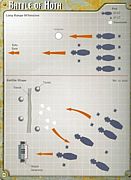
早い時期にハイパースペースから離脱し、それが惑星から遠い場合、攻撃側は星系について調査する時間を得る。無論それだけでなく、防御側に防衛準備させることを許すことにもなる。遅い時期、かつ近距離で出た場合、防御側に奇襲をかけられるが、攻撃側は準備の時間を十分に得られない。ウンターによれば、ホスの戦いにおけるアプローチは、間違った決断がいかにして問題を複雑にするか、教本に載せられる良い例である。彼は、オゼル提督は惑星から近すぎる距離でハイパースペースから出でたがために、彼の部隊はきちんと惑星を調査できなかった。反乱軍の火力を見くびったために、侵攻部隊は確固たる計画なしに、行動に移らねばならなかった。オゼルが、ホスから遠い地点でハイパースペースから出たならば、反乱軍の火力に基づいて攻撃計画を立て、脱出する反乱軍の艦艇はさらに少数になったであろう。
経路の設定について
もう一つの、アプローチの段階における重要な部分は、惑星へのルートである。ルートは慎重に決定されねばならない。ガス雲、小惑星帯は接近の前によくスキャンされるべきである。敵の戦闘機部隊がその中に隠れているかもしれないからだ。ウンターによれば、スキャンの結果が明らかでないとしても、全作戦期間中、そのような地域を警戒し続けるのが良い方策ということである。
輸送艦と輸送について
輸送艦、輸送そのものは、この段階では護衛されている。防御側は確実にそれを目標とする。スターデストロイヤーは、その多大な火力と指揮調整能力により、最初に目標となる艦の一つだろう。
*****************************************************
原文
Approach was, according to Michael Unther, the first phase in a planetary assault. This stage covered the initial approach to the planet in question and required the commander of the assault fleet to make strategic decisions of various kinds, such as deciding how late or early to drop out of hyperspace and how close to the planet.
Dropping out of hyperspace
Emerging early, and far from the planet, gave the assault fleet time to reconnoiter the system, but also allowed the defending forces to mobilize and prepare their defenses. Emerging late and close to the planet deprived the invading force of much preparatory time but one the other hand allowed the invasion fleet to surprise the defending forces. According to Unther, the approach phase of the Battle of Hoth was a textbook example of how wrong decision in the approach phase may complicate matters. He argued that Admiral Ozzel emerged from hyperspace too close to the planet, which did not allow his forces to reconnoiter the system properly. Having underestimated the Rebels' firepower, the invasion fleet was forced into maneuver quickly without proper planning. Had Ozzel emerged from hyperspace further from Hoth, there could have been time to plan the attack in accordance with the Rebels' firepower and fewer Rebel ships would have managed to escape.
Planning the route
Another important aspect of the approach phase was the route towards the planet. The route had to be carefully planned, and phenomena like gas clouds and asteroid fields should be carefully scanned before moving the fleet close to them, since enemy fighter squadrons could be hidden there. Even if the scans proved inconclusive, it was, according to Unther, a good idea to keep such areas lightly guarded throughout the entire operation.
Transport ships and transports
Transport ships and transports were to be protected during this phase, since they were typically certain targets to the defending forces. Star Destroyers were among the first ships to be targeted because of their considerable firepower and their command coordination capabilities.
*****************************************************
接近
アプローチとは、マイケル・ウンターによれば、惑星攻囲の第一段階である。この段階においては、惑星に接近する初期の段階における様々な疑問、要求に関して攻略部隊の艦隊指揮官が、ハイパースペースから出る時期、惑星からの距離等、決断を下すものである。
ハイパースペース離脱について
早い時期にハイパースペースから離脱し、それが惑星から遠い場合、攻撃側は星系について調査する時間を得る。無論それだけでなく、防御側に防衛準備させることを許すことにもなる。遅い時期、かつ近距離で出た場合、防御側に奇襲をかけられるが、攻撃側は準備の時間を十分に得られない。ウンターによれば、ホスの戦いにおけるアプローチは、間違った決断がいかにして問題を複雑にするか、教本に載せられる良い例である。彼は、オゼル提督は惑星から近すぎる距離でハイパースペースから出でたがために、彼の部隊はきちんと惑星を調査できなかった。反乱軍の火力を見くびったために、侵攻部隊は確固たる計画なしに、行動に移らねばならなかった。オゼルが、ホスから遠い地点でハイパースペースから出たならば、反乱軍の火力に基づいて攻撃計画を立て、脱出する反乱軍の艦艇はさらに少数になったであろう。
経路の設定について
もう一つの、アプローチの段階における重要な部分は、惑星へのルートである。ルートは慎重に決定されねばならない。ガス雲、小惑星帯は接近の前によくスキャンされるべきである。敵の戦闘機部隊がその中に隠れているかもしれないからだ。ウンターによれば、スキャンの結果が明らかでないとしても、全作戦期間中、そのような地域を警戒し続けるのが良い方策ということである。
輸送艦と輸送について
輸送艦、輸送そのものは、この段階では護衛されている。防御側は確実にそれを目標とする。スターデストロイヤーは、その多大な火力と指揮調整能力により、最初に目標となる艦の一つだろう。
*****************************************************
原文
Approach was, according to Michael Unther, the first phase in a planetary assault. This stage covered the initial approach to the planet in question and required the commander of the assault fleet to make strategic decisions of various kinds, such as deciding how late or early to drop out of hyperspace and how close to the planet.
Dropping out of hyperspace
Emerging early, and far from the planet, gave the assault fleet time to reconnoiter the system, but also allowed the defending forces to mobilize and prepare their defenses. Emerging late and close to the planet deprived the invading force of much preparatory time but one the other hand allowed the invasion fleet to surprise the defending forces. According to Unther, the approach phase of the Battle of Hoth was a textbook example of how wrong decision in the approach phase may complicate matters. He argued that Admiral Ozzel emerged from hyperspace too close to the planet, which did not allow his forces to reconnoiter the system properly. Having underestimated the Rebels' firepower, the invasion fleet was forced into maneuver quickly without proper planning. Had Ozzel emerged from hyperspace further from Hoth, there could have been time to plan the attack in accordance with the Rebels' firepower and fewer Rebel ships would have managed to escape.
Planning the route
Another important aspect of the approach phase was the route towards the planet. The route had to be carefully planned, and phenomena like gas clouds and asteroid fields should be carefully scanned before moving the fleet close to them, since enemy fighter squadrons could be hidden there. Even if the scans proved inconclusive, it was, according to Unther, a good idea to keep such areas lightly guarded throughout the entire operation.
Transport ships and transports
Transport ships and transports were to be protected during this phase, since they were typically certain targets to the defending forces. Star Destroyers were among the first ships to be targeted because of their considerable firepower and their command coordination capabilities.
Orbitの項
***********************************************
軌道とは、宇宙船もしくはステーションが惑星外にとどまっている状態、もしくは、単に大気圏外を言う。
また、軌道は、惑星攻囲の第二段階であり、目標となる惑星の周辺や、軌道上を支配すること、侵攻艦隊の部隊を配置するなどが行われる。
二種類の軌道
帝国の軍事戦略家、マイケル・ウンザーによれは、2つの位相にあわせた二つの戦術がある。すなわち、単目標軌道と包囲軌道である。
単目標軌道
単目標軌道は、全艦隊を単一の目標、惑星の首都、宇宙港の上空に集結させることである。これにより、侵攻艦隊は攻略の緊要な箇所を抑え、防衛側の小グループの宇宙船による襲撃を防ぐことが出来る。ただし、小さな地域しかコントロールすることは出来ないし、この方法では、侵攻艦隊は敵の補給線を抑えることは出来ない。これは、目標の数を減らす戦略、都市、宇宙港、産業施設への砲撃なのである。
包囲軌道
包囲軌道においては、艦隊の艦船は敵艦船の惑星への出入りを妨げるために惑星全体に展開する。そして、防御側の補給物資を減らし、敵の地上部隊に、集中爆撃の懸念を抱かせることができる。
ウンザーは、これを単目標軌道よりも危険であると考え、ホスでの例は、包囲軌道の弱点が表れた例であると論じている。ダース・ヴェイダーの侵攻艦隊は、接近段階におけるオゼル提督のミスによってハンデを負った。ホス星系に近すぎる箇所でハイパースペースから出たことで、艦船は急いで割り当てられた配置につかねばならなかったし、戦闘機の護衛を発信させる時間も少なかった。いくつかの反乱軍艦船は、帝国軍艦船が惑星軌道上の配置につくまでに脱出することが出来たのだ。
防衛軍について
この段階における重要なことは、ウンザーによれは、防衛軍の知識、いくつかの異なる方法によって惑星を攻囲から守ることである。ブリックスの戦いにおけるカリガンの変わった戦略は、帝国軍の侵攻艦隊にいくつかの問題をもたらした。しかしながら、いずれにも共通するよい戦略は戦闘機によるスペース・スナイプ戦法である。
原文
Orbit was the state of a starship or space station that was holding position outside, or just within a planet's outer atmosphere.
Orbit was also the second phase in a planetary assault and covered the gaining control of the orbital space around the target planetary system and the strategic orbital placement of the units in the invasion fleet.
Two types of orbital assault
According to military strategist Michael Unther of the Galactic Empire, there were two main tactics within this face: objective orbit and siege orbit.
Objective orbit
Imperial Star Destroyers and frigates bombard a planet from orbit
Objective orbit consisted in placing the entire invasion fleet in the space above one single objective like a capital or a starport. This would allow the invasion fleet to target key points while remaining safe from raids by small groups of defending ships, but also only allowed for the control of smaller areas. Moreover, this strategy did not allow the invasion fleet to control enemy supply lines. One strategy to reduce the number of objectives was simply to bombard cities and starports as well as industrial facilities.
Siege orbit
In a siege orbit, the units in the fleet are placed around the planet so as to prevent enemy ships from leaving and entering. Siege orbits thus reduced the number of logistic assets of the defenders and also allowed for the bombardment of enemy ground forces wherever they would concentrate.
Unther considered this a more risky alternative to the objective orbit, and argued that the orbital siege at the Battle of Hoth was an example of the weaknesses of siege orbits as Darth Vader's invasion force were somewhat handicapped due to Admiral Ozzel's mistake during the approach phase. Because the fleet came out of hyperspace too close to the Hoth system, the fleet units had to rush to get to their assigned positions, giving them little time for deploying fighter escorts. Several Rebel ships managed to escape the system before Imperial vessels had reached their planetary orbital positions.
Defending forces
An important aspect of this phase was, according to Unther, knowledge of the defending forces, as there were several different ways to defend a system from planetary assault. The unorthodox strategies of Carigan at the Battle of Bryx caused severe problems for the Imperial invasion fleet. The most common type of planetary defense, however, was the starfighter-based space-snipe strategy.
Wookieepedia "Invasion" の項目
****************************************
侵攻
侵攻とは、惑星攻囲作戦における第三の段階である。宇宙戦略家マイケル・ウンザーは、この段階においては、惑星占領のための地上における戦闘が主であり、艦隊司令官が責任を負う段階ではないものの、これに関する見識を持つのは良いことだと論じている。
このような決まった状況下では、惑星防衛用シールドジェネレーターの破壊や砲撃といった、副次的な任務が要求されるだろう。そこでは、どのような目標を狙い、どのような目標を外すべきか(軍事施設と病院、といったような)が重要となる。地上部隊降着地点の安全化も行うことになるだろうが、そのための砲撃密度と規模は、地上部隊の規模にもよる。
*********************************************
原文
Invasion was the third stage in a planetary assault operation. Naval strategist Michael Unther argued that, while this stage which covered the ground battle for control of the planet was not the responsibility of the commander of the invasion fleet, it was a good idea to have some insight into this phase after all.
There were certain situations where the fleet could be called for to perform certain tasks such as taking out planetary shield generators, bombarding the planet into submission. Here, it was important to know which targets to destroy, like military targets, and which targets to avoid, like hospitals. The fleet could also be asked to clear landing zones; the density and nature of the bombardment depended on the units to be landed.
Wookieepedia コントロールの項
***********************************************
帝国の戦略家マイケル・ウンザーが言うには、コントロールは、惑星侵攻作戦の中の最終段階であり、最も重要な段階である。これは、征服した惑星を支配することである。
ウンザーによれば、この段階におけるいくつかの重要な要素は、住民に恐れを抱かせる(軌道砲撃の脅威にあることによって)、文化に関する知識を得る(住民に関する知識を得るために当該惑星の文化、伝統を学ぶ)プロパガンダである。敵に関する知識から、もっとも効果的なプロパガンダの種類がわかる。そのほかの重要なプロパガンダの要素は、レジスタンスによるサボタージュを非難することである。帝国が反乱軍をテロに加担し飢餓を引き起こすとよく非難するのはこういうことからだ。大抵成功する戦略は、惑星を制圧した後、シンパシーを得るために、食料を住民に提供することである。
*****************************************
原文
Control was the final, and according to strategist Michael Unther of the Galactic Empire, the most important phase in a planetary assault operation. It consisted in maintaining control of the conquered system.
According to Unther some important aspects of this phase were inducing fear in the inhabitants (by threatening them into submission with orbital bombardments), gaining cultural knowledge (study the local culture and traditions to gain more knowledge about the inhabitants), and propaganda. Knowledge of the enemy allowed for designing the most effective type of propaganda. Another important aspect of propaganda was to blame acts of sabotage on resisting military forces. Thus, Imperials often blamed the Rebellion for committing terrorism and causing famines. An often successful strategy was to bring food to the inhabitants after gaining control over their planet in order to gain their sympathy and admiration.
- mixiユーザー
- ログインしてコメントしよう!
|
|
|
|
Warfare in STARWARS 更新情報
-
最新のイベント
-
まだ何もありません
-
-
最新のアンケート
-
まだ何もありません
-
Warfare in STARWARSのメンバーはこんなコミュニティにも参加しています


人気コミュニティランキング

- 1位
- 相棒
- 59200人

- 2位
- 写真を撮るのが好き
- 209877人

- 3位
- 30代〜40代から友達作り【友活】
- 35879人