
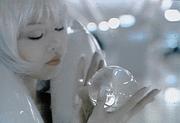


トピックも立てず、ダメダメコミュ主で失礼;;
では私のMariko Moriとの出会い。
以前ロンドン留学時、『The Representation of women in‘kawaii’Culture in Japan』と言うタイトルで日本女性のかわいいもの好きについての論文を書きました。その時、にわかに人気が出て来たMariko Moriも論文内で取り上げたのが彼女を知ったきっかけです。初め『こんなコスプレがアートだぁ〜???』と嫌悪してたんですが、ちゃんと調べて行くうちにすっかりファンになってました(笑)
帰国してからの方が彼女の情報がないので、皆さん何でも良いので彼女について知ってる事など語って下さい♪
では私のMariko Moriとの出会い。
以前ロンドン留学時、『The Representation of women in‘kawaii’Culture in Japan』と言うタイトルで日本女性のかわいいもの好きについての論文を書きました。その時、にわかに人気が出て来たMariko Moriも論文内で取り上げたのが彼女を知ったきっかけです。初め『こんなコスプレがアートだぁ〜???』と嫌悪してたんですが、ちゃんと調べて行くうちにすっかりファンになってました(笑)
帰国してからの方が彼女の情報がないので、皆さん何でも良いので彼女について知ってる事など語って下さい♪
|
|
|
|
コメント(32)
論文のMariko Moriについて書いた部分のみ抜粋してます。
下手な英語ですが、難しい事は書いてないので興味のある人は読んでみて下さい♪
I would like to explain about Mariko Mori and the representation of women. Mori is becoming one of the most innovative multimedia artists in the world. Born in Tokyo in 1967, she graduated from a traditional, highly structured girlユs high school there. After high school she studied design at Tokyoユs Bunka Fashion college and worked part-time as a fashion model. She began to wear clothing of her own design, photographed by others. She went to London to study in 1988, first at the Byam Show School of Art and subsequently at the Chelsea College of Art, in 1992. Mori moved to New York City to enter the year-long Independent Study Program at the Whitny Museum of American Art. She currently maintains two studios, one in New York and one in Tokyo.
In her earliest work Mori presented herself in huge photographs as a playful cyborg- half alluring girl, half mechanical doll- cast in roles simultaneously up-to-the-minute and steeped in Japanese cultural history. She used things made of plastic in plastic colours might be influenced by Japanese pop culture. Japanese pop culture consists of cartoons and comics, technologically advanced computer games, rock stars and a specially distinctive ヤcuteユ aspect. Mori often describes this ヤcuteユ in her work, for example ヤBirth of a Starユ.( figure 1) A cyber popster with spiky coloured hair, wearing futuristic plastic adornment, and flying colourful plastic balls. This futuristic cute work recalls Japanese cartoonist Osamu Tezuka, (I have mentioned in the second chapter) who brought both a future vision and Eastern philosophy to the masses with his manga Astro Boy. Her generation in Japan grew up as watching Tezukaユs and many other animations, and surrounded by cute characters such as ヤHello Kittyユ. Moreover, the contemporary Japanese pop culture is now mixed in the informationalized society. Mori might be the child of such a society. Dominic Molon describes about her work that ヤMoriユs work reach across the ages, combining Japanese tradition, Eastern and Western art historical forms and motifs, and more contemporary phenomena like fashion, science fiction, popular culture, and high technology.ユ1 Under the influence of such mixed culture, Mori might choose the way to represent herself to be cute animated character. This is almost same idea with an artist who is Cindy Sherman. Sherman has imitated and confronted assorted representational tropes, exploring the myriad ways in which women and the body are depicted by effective contemporary image-maker, including the mass media and historical sources such as fairy tales, portraiture, and surrealist photography. Sherman stated about her work ヤFairy Tales,1985.(figure 2)
ヤIn horror stories or in fairy tales, the fascination with the morbid is also, at least for me, a way toprepare for the unthinkable.... Thatユs way itユs very imprtant for me to show the artificiality of it all, because the real horrors of the world are unmatchable, and theyユre too profound. Itユs much easier to absorb - to be entertained by it, but also to let it affect you psychologically - if itユs done in a fake, hummorous, artificial way.ユ1
Mori, like Sherman might thought ヤabsorbingユ is the most effective way to represent. Mori also states that ヤwhen you wear clothes you become a personality, you become the clothes.ユ2 Her clothes which cute animated are her personality. Making or wearing such cute animated works under the influence of Japanese pop culture might be natural for Mori. She moreover stated that ヤall kind of fantasies and dreams are very important in our life.ユ3 She might represent her dreams and fantasies in order to be a cute animated character herself in her work. This is a new way of representation. Mori established a way of representation for ヤcuteユ. Many artists tried new representations. Mori commented about Sherman, ヤrepresenting so many different aspect of being a womanユ. Other artists tend to investigate ヤbeautyユ. However, Sherman tried to represent ヤuglinessユ as well. She might show us human beings do not only consist of ヤbeautyユ, but also have many expressions such as anger, sadness, and indecency. We can realise those things through her works, ヤit is a part of me.ユ
Sherman and Mori appear in their work in the postmodern role of the medium through which various social and cultural ideas may be evoked. Many women who are not artists might also have the same ideas as these artists. We can see a many people wearing cute animated clothes in Japan. (figure 1) They might think ヤabsorbingユ is the most effective way to represent themselves. They can also show the scent of the contemporary culture such as Japanimation or cute to absorb with stuffs which they have. This is a reason why many women wear , buy, or collect cute things.Watching animation, and having cute character goods, those things are originally established for children, however, many Japanese women try to change such old idea, and like Mori many women also realise the importance of ヤdreams and fantasiesユ in their everyday life. That is ヤcuteユ. Thus, many Japanese women now do not hesitate to be cute.
はじめまして。
森万里子、今の今までコミュがないとは、やはり日本では人気ないんですね;;
日本での彼女の大規模な展覧会は2002年東京都現代美術館で行われた「ピュアランド」ぐらいでしょうか?
それ以降は去年、東京大学小石川分館で「森万里子 縄文−光の化石 トランスサークル」展というのがあったようです。
私は大阪在住なので「ピュアランド」は行けなかったのですが、SSSさんは御覧になったのでしょうか?
「縄文−光の化石 トランスサークル」展も東京に行く用事があったにも関わらずフリーな日が月曜(休館日)だったので、結局見れず終いでした。
私が唯一見れた彼女の作品はロンドンのHaywards Galleryで行われた「Sonic Boom」という展覧会での映像作品のみです。
数ある作品の中で、彼女の映像作品の前だけ何人もの人が立ち止まって、見とれていた(?)のを覚えています。かなり癒し系でした(笑)
SSS さんも見た作品の感想なんかありましたら是非書いて下さい。
>まほさん
はじめまして。
私は小沢剛さんの展覧会も見てないんですけど、おっしゃってたのはHawaiさんのご指摘の方の作品だったんでしょうか?森万里子の作品ではないですが、かわいいですね〜。女性アーティストが作る作品って共感できる事が多いので、どういう意図の作品だったか気になります!
>SSSさん
当時のパンフ発見できました?
きっととてつもなく美しい空間だったんでしょうね〜?文章読んでるだけでも癒されます(笑)
パンフ見つかったら是非画像UPお願いします!
>izuponさん
本当にドリームテンプルな空間だったようですね?
私もまた同じ展覧会をやって欲しいです!
去年学校に森美術館の副館長N氏が来た時に『やらないですか?』と伺ったら、『彼女の展覧会お金かかるからねぇ〜』とリアルな返事が返ってきました(笑)「ピュアランド」もプラダ財団が後援してるし、相当な後方支援がない限りどうも難しそうです;;
本当に行っておけば良かったです;;
ところでググったら上記の様な商品が出てきました。
香炉だそうですが、38,000円!
作品と思えば安いですが、やっぱり手が出せないですね〜;;
>Hawaiさん
はじめまして!
万里子さんご懐妊!知りませんでした。アメリカの方とご結婚されてるんでしたっけ?
そして「トランスサークル展」ご覧になったんですね?
去年WEB上で見た限りではきれいなスケルトンカラーの岩(?)が何個か配置された空間のように見えましたが、一部屋だけのインスタレーションだったんでしょうか?
そして展覧会は縄文の母神信仰と結びついてるテーマだったんですか?岡本太郎も縄文は日本独自の文化と言ってますが、その辺追求するとかなり面白そうですね?
あっチェックするの忘れてた!
>きむりんさん
はじめまして。ユニクロ買ったんですか?いい感じですか?
私も買おうかな・・・
「ピュアランド」はやっぱり聞けば聞くほど行けばよかったと後悔;;
皆さんの感想から想像して私も和んでみます〜
>shinさん
はじめまして〜
やなぎみわさんは学校で何回かレクチャーがあって、とても感銘を受けました!
束芋さんは一作品しか見たことがないので、ちゃんと見てみたいですね〜。でも女性作家の作品はとてもパーソナルな感じがしてどの人のもわりと共感できます。
>>森美術館のミュージアムグッズに指定されているお茶カプセルが 欲しくてたまらないのですが
そんなものまであるんですか?
森美術館、グッズ出さなくていいから展覧会やってよね〜。
>まほさん
>>コスプレセットですかあ。 仮装にぴったりですねぇ。
一回着てみたいですね〜。
森村さんややなぎさんみたいに一般公募で人をコスプレさせて撮ってくれたりしないのかな・・・
って選ばれるわけないけど;;
初めまして。
私は「ピュアランド」で森万里子さんを知りました。
その展覧会で彼女のプロフィールを読んで、なんだか胸騒ぎが!
ロンドンの学校に通っていたとか、お父様が大学教授、という点がひっかかったのです。
そして、思い出しました。
学生のころ、ロンドンに1ヶ月語学留学をしたのですが、
ある日、学校の入り口にすごいファッションの女の子がいて
「うわ、あの子、すごい服だね」と同じクラスの子に言うと、
「あ、万里子ちゃん!私のお姉ちゃんなの。待ち合わせしてたんだ」と言うではありませんか!
妹さんから、お父様が大学教授ということを聞いていたし、お姉さんはモデルをしていたけれど、今はアートの勉強をしている、と教えてもらっていたので、
森万里子さんは、絶対にあのときの女の子なんです。
驚きました〜。
なので、本当の森万里子さんとの出会いは13年前(たぶん)のロンドンでした!
はじめまして!
森万里子さんのコミュがあることを知って、即、混ざりに参りました(^^;)。
私も2002年の東京都現代美術館「森万里子ピュアランド」展を見に行って大感動しました。
この展覧会のことは新聞の展覧会評で偶然知ったのですが、その評の言う通り「新しい」「浮き立ってくる」ような「若々しい感覚」は非常に新鮮でした。同じく「作品を見せたいと思う対象がこれまでの美術作家とは異なっているのではないか」という感想も、全く同感でした。
○森万里子 ピュアランド展について
http://event.japandesign.ne.jp/news.php3?number=1963020115
○同上・展示会チラシ
(直接リンクを張ってはいけないそうなので、googleで「森万里子ピュアランド」と「著作権」をAND条件でキーワード検索してみてください。検索結果は一つのはずで、チラシが見られます)
なお、もう既出の内容かもしれませんが、彼女の父君・森敬博士(故人)は、慶応大学の教授で、理工学部の先生でありながら、元々はその父君(=万里子さんのお祖父様)の森泰吉郎氏(やはり故人)と同じく経済学者だったそうです。
この森敬博士の発案でよく知られるのが太陽光採光システム「ひまわり」です。これは単なる技術発明と言うよりも、どうやらもっとエコロジカルな思想に立脚するもののようですね。
http://www.himawari-net.co.jp/j_enkaku.htm
「ピュアランド」展でも、上記でsssさんの書かれている「太陽光を取り入れて輝く、大きな蓮の花」の作品の照明に使われていました。
娘から亡き父へ捧げるオマージュなのでしょうが、父親に寄せる娘の深い愛情が感じられ、これも感動的な作品の一つでした。
ちなみにお母様の森洋子氏はブリューゲル研究で知られる、やはり大学教授だそうです。
http://www.meiji.ac.jp/sst/teacherlist/sobunlist.html#14
なお、美術とは関係ない蛇足ですが(^^;)、ご存知のように森ビルグループ創始者の森泰吉郎氏には、子息が三人いらっしゃいました。ご長男が上記の森敬博士、次男が現・森ビル社長の森稔氏(○○森ビル、○○ヒルズ)、三男が森トラストの森章社長(○○MTビル)というわけです。
コミュを見つけた興奮から、美術に関係ないことまで含めて思わず長文になってしまいましたが(^^;)、宜しくお願いいたします!
はじめまして
コミュのみなさん
万里子さんは
私が
文化服装学院で 助手していた時の教え子です
当時からアートに関心 ありの素敵な 子でした
ビビアンの服が大好きでした
私が マーク アーモンドが大好きなんで まりちゃん
SAY HELLOW WAVE GOODBYE
よく唄ってくれました
ニューヨークに行ってからは
お会いしてません
ロンドンに行ってるとき1990年 日本に帰ってきた時に 美術館館に 一緒にいきました
千葉の佐倉美術館とジェフ・クーンズ とかバスキアの作品が出ていた幕張のファルマコン‘90でした
現代アートとかたくさん 解説してくれました
彼女の活躍 お祈りしています
コミュのみなさん
万里子さんは
私が
文化服装学院で 助手していた時の教え子です
当時からアートに関心 ありの素敵な 子でした
ビビアンの服が大好きでした
私が マーク アーモンドが大好きなんで まりちゃん
SAY HELLOW WAVE GOODBYE
よく唄ってくれました
ニューヨークに行ってからは
お会いしてません
ロンドンに行ってるとき1990年 日本に帰ってきた時に 美術館館に 一緒にいきました
千葉の佐倉美術館とジェフ・クーンズ とかバスキアの作品が出ていた幕張のファルマコン‘90でした
現代アートとかたくさん 解説してくれました
彼女の活躍 お祈りしています
- mixiユーザー
- ログインしてコメントしよう!
|
|
|
|
森 万里子(Mariko Mori) 更新情報
-
最新のイベント
-
最新のアンケート
-
まだ何もありません
-
森 万里子(Mariko Mori)のメンバーはこんなコミュニティにも参加しています


人気コミュニティランキング

- 1位
- カラオケ「町田オフ」
- 1124人
- 2位
- 暮らしを楽しむ
- 78116人

- 3位
- 写真を撮るのが好き
- 209885人