
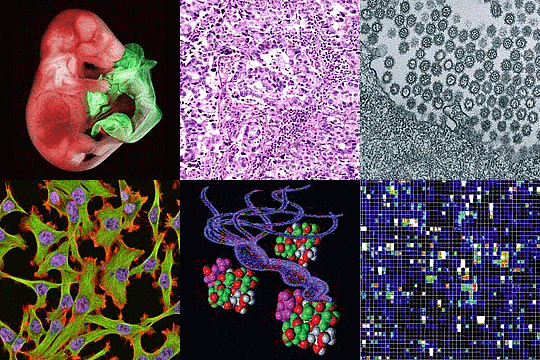


Highlights: 免疫:DNAと免疫
http://
DNAは免疫応答の強力な活性化因子である。このことは40年以上も前から知られていたが、これにかかわる機構はまだ明らかではない。今回、高岡晃教たちは、自然免疫応答に関与する細胞質内DNAセンサーを同定した。その分子は、インターフェロンによって誘導されるタンパク質DLM-1/ZBP1である。この分子に関してはこれまで生物学的な機能は全く知られていなかったので、改めてDAI(DNA-dependent activator of IFN-regulatory factors(DNA依存性インターフェロン調節因子活性化分子))という名前が付けられた。DAIが主要なDNAセンサーとして同定されたことは、DNAがかかわる微生物に対する免疫や自己免疫疾患の基盤となるシグナル伝達機構に新たな理解をもたらすかもしれない。
参考論文
DAI (DLM-1/ZBP1) is a cytosolic DNA sensor and an activator of innate immune response.
Takaoka A, Wang Z, Choi MK, Yanai H, Negishi H, Ban T, Lu Y, Miyagishi M, Kodama T, Honda K, Ohba Y, Taniguchi T.Nature. 2007 Jul 26;448(7152):501-5.
http://
A Toll-like receptor-independent antiviral response induced by double-stranded B-form DNA.
Ishii KJ, Coban C, Kato H, Takahashi K, Torii Y, Takeshita F, Ludwig H, Sutter G, Suzuki K, Hemmi H, Sato S, Yamamoto M, Uematsu S, Kawai T, Takeuchi O, Akira S.
Nat Immunol. 2006 Jan;7(1):40-8.
http://
Recognition of cytosolic DNA activates an IRF3-dependent innate immune response.
Stetson DB, Medzhitov R.
Immunity. 2006 Jan;24(1):93-103.
http://
Toll-like receptor-independent gene induction program activated by mammalian DNA escaped from apoptotic DNA degradation.
Okabe Y, Kawane K, Akira S, Taniguchi T, Nagata S.
J Exp Med. 2005 Nov 21;202(10):1333-9.
http://
Herpes simplex virus type-1 induces IFN-alpha production via Toll-like receptor 9-dependent and -independent pathways.
Hochrein H, Schlatter B, O'Keeffe M, Wagner C, Schmitz F, Schiemann M, Bauer S, Suter M, Wagner H.
Proc Natl Acad Sci U S A. 2004 Aug 3;101(31):11416-21.
http://
http://
DNAは免疫応答の強力な活性化因子である。このことは40年以上も前から知られていたが、これにかかわる機構はまだ明らかではない。今回、高岡晃教たちは、自然免疫応答に関与する細胞質内DNAセンサーを同定した。その分子は、インターフェロンによって誘導されるタンパク質DLM-1/ZBP1である。この分子に関してはこれまで生物学的な機能は全く知られていなかったので、改めてDAI(DNA-dependent activator of IFN-regulatory factors(DNA依存性インターフェロン調節因子活性化分子))という名前が付けられた。DAIが主要なDNAセンサーとして同定されたことは、DNAがかかわる微生物に対する免疫や自己免疫疾患の基盤となるシグナル伝達機構に新たな理解をもたらすかもしれない。
参考論文
DAI (DLM-1/ZBP1) is a cytosolic DNA sensor and an activator of innate immune response.
Takaoka A, Wang Z, Choi MK, Yanai H, Negishi H, Ban T, Lu Y, Miyagishi M, Kodama T, Honda K, Ohba Y, Taniguchi T.Nature. 2007 Jul 26;448(7152):501-5.
http://
A Toll-like receptor-independent antiviral response induced by double-stranded B-form DNA.
Ishii KJ, Coban C, Kato H, Takahashi K, Torii Y, Takeshita F, Ludwig H, Sutter G, Suzuki K, Hemmi H, Sato S, Yamamoto M, Uematsu S, Kawai T, Takeuchi O, Akira S.
Nat Immunol. 2006 Jan;7(1):40-8.
http://
Recognition of cytosolic DNA activates an IRF3-dependent innate immune response.
Stetson DB, Medzhitov R.
Immunity. 2006 Jan;24(1):93-103.
http://
Toll-like receptor-independent gene induction program activated by mammalian DNA escaped from apoptotic DNA degradation.
Okabe Y, Kawane K, Akira S, Taniguchi T, Nagata S.
J Exp Med. 2005 Nov 21;202(10):1333-9.
http://
Herpes simplex virus type-1 induces IFN-alpha production via Toll-like receptor 9-dependent and -independent pathways.
Hochrein H, Schlatter B, O'Keeffe M, Wagner C, Schmitz F, Schiemann M, Bauer S, Suter M, Wagner H.
Proc Natl Acad Sci U S A. 2004 Aug 3;101(31):11416-21.
http://
|
|
|
|
コメント(12)
阪大、次世代ワクチンの働く仕組み解明・効力発揮の酵素特定
http://www.nikkei.co.jp/news/shakai/20080207AT1G0603C06022008.html
大阪大学のチームは、簡単に量産できる次世代ワクチンとして研究が盛んな「DNA(デオキシリボ核酸)ワクチン」が、体内で働く仕組みを解明した。ワクチンが効力を発揮するのに不可欠なたんぱく質(酵素)を突き止めた。予防効果の高いワクチンの研究に役立つ成果となり、インフルエンザなどの感染症ごとに最適なワクチンの研究開発が加速しそうだ。
解明したのは審良静男教授と石井健准教授らのチーム。成果は英科学誌ネイチャーに7日掲載される。
DNAワクチンは特殊な遺伝子を組み込んであり、ウイルスなどの病原体を攻撃する際の目標となる物質(抗原)を体内で作る働きがある。ウイルスが感染する前に投与すると、免疫システムが働き、抗原を認識する物質(抗体)ができる。ウイルスが侵入すると抗体が効果的に攻撃する。(07:00)
DNAワクチンの働く仕組み解明 大阪大
http://www.asahi.com/kansai/news/OSK200802060063.html
大阪大の審良(あきら)静男教授、石井健准教授らのチームは、遺伝情報であるDNAを使ったDNAワクチンが免疫を活性化させる仕組みを突き止めた。次世代型ワクチンとして期待が高いが、作用の仕組みが不明だった。7日付の英科学誌ネイチャーで発表される。
チームは、TBK1と呼ばれる酵素がカギを握ると注目。TBK1を持たないマウスを遺伝子工学で作り出し、DNAワクチンを注射したところ、全く作用しなかった。この結果、DNAワクチンは、TBK1に作用して免疫を活性化させることが分かった。
さらに、免疫を担う細胞だけにTBK1があるマウスにDNAワクチンを注射した。すると、免疫系細胞と筋肉細胞の両方にTBK1があるマウスに比べ、効果が大幅に低下。DNAワクチンの作用には、免疫系の細胞だけでなく、一般の細胞も深くかかわっていることも明らかにした。
DNAワクチンは、製法が従来より簡単でコストも低く、がんやアレルギー、アルツハイマーなどの治療に期待が高い。筋肉に注射する。人での承認はまだだが、動物では感染症やがんの治療に使われ始めている。
石井准教授は「安全なDNAワクチンの開発に役立つと思う。遺伝子治療でも同じようなDNAを使うため、より効果的な薬剤の設計が可能になるはずだ」と話す。
The inflammasome recognizes cytosolic microbial and host DNA and triggers an innate immune response
Daniel A. Muruve1,5, Virginie Pétrilli3,5, Anne K. Zaiss2, Lindsay R. White1, Sharon A. Clark1, P. Joel Ross4, Robin J. Parks4 & Jurg Tschopp3
Department of Medicine,
Biochemistry and Molecular Biology, University of Calgary, Alberta T2N 4N1, Canada
Department of Biochemistry, University of Lausanne, Epalinges, Switzerland
Molecular Medicine Program, Ottawa Health Research Institute, Ottawa, Ontario K1Y 4E9, Canada
These authors contributed equally to this work.
Correspondence to: Jurg Tschopp3 Correspondence and requests for materials should be addressed to J.T. (Email: Jurg.Tschopp@unil.ch).
The innate immune system recognizes nucleic acids during infection and tissue damage. Whereas viral RNA is detected by endosomal toll-like receptors (TLR3, TLR7, TLR8) and cytoplasmic RIG-I and MDA5, endosomal TLR9 and cytoplasmic DAI bind DNA1, resulting in the activation of nuclear factor-B and interferon regulatory factor transcription factors. However, viruses also trigger pro-inflammatory responses2, which remain poorly defined. Here we show that internalized adenoviral DNA induces maturation of pro-interleukin-1 in macrophages, which is dependent on NALP3 and ASC, components of the innate cytosolic molecular complex termed the inflammasome. Correspondingly, NALP3- and ASC-deficient mice display reduced innate inflammatory responses to adenovirus particles. Inflammasome activation also occurs as a result of transfected cytosolic bacterial, viral and mammalian (host) DNA, but in this case sensing is dependent on ASC but not NALP3. The DNA-sensing pro-inflammatory pathway functions independently of TLRs and interferon regulatory factors. Thus, in addition to viral and bacterial components or danger signals in general, inflammasomes sense potentially dangerous cytoplasmic DNA, strengthening their central role in innate immunity.
http://www.nature.com/nature/journal/v452/n7183/abs/nature06664.html
AIM2は細胞質のdsDNAを認識し、カスパーゼ1を活性化するインフラマソームをASCとともに形成する
Veit Hornung1,2, Andrea Ablasser1,2, Marie Charrel-Dennis1, Franz Bauernfeind1,2, Gabor Horvath1, Daniel. R. Caffrey3, Eicke Latz1,4 & Katherine A. Fitzgerald1,4
Division of Infectious Diseases and Immunology, Department of Medicine, University of Massachusetts Medical School, Worcester, Massachusetts 01605, USA
Institute of Clinical Chemistry and Pharmacology, Universitätsklinikum Bonn 53127, Germany
Pfizer, 620 Memorial Drive, Cambridge, Massachusetts 02139, USA
These authors contributed equally to this work.
Correspondence to: Veit Hornung1,2Katherine A. Fitzgerald1,4 Correspondence and requests for materials should be addressed to K.A.F. (Email: kate.fitzgerald@umassmed.edu) or V.H. (Email: veit.hornung@uni-bonn.de).
自然免疫系は、生殖細胞系列にコードされているパターン認識受容体によって核酸を感知する。RNAは、Toll様受容体に属するTLR3、TLR7およびTLR8、あるいはRNAヘリカーゼであるRIG-I(別名DDX58)やMDA-5(IFIH1)によって感知される。抗ウイルス応答および(あるいは)炎症応答の引き金となる細胞質DNAを感知する機構については、ほとんど知られていない。これらの応答で最もよく特徴が明らかになっているのは、I型インターフェロン遺伝子群の転写誘導の引き金となる、TANK結合キナーゼ(TBK1)-インターフェロン制御因子3(IRF3)シグナル伝達軸の活性化である。もう1つの、あまり特徴が明らかになっていない経路は、「インフラマソーム」の活性化を引き起こす経路で、カスパーゼ1を介して、サイトカインであるIL1βやIL18の前駆体型の触媒による切断を制御する。本論文では、マウスとヒトの細胞を使用して、PYHIN(pyrin and HIN domain-containing protein)ファミリーに属するAIM2(absent in melanoma 2)が、カスパーゼ1を調節する細胞質DNA受容体であることを明らかにする。AIM2のHIN200ドメインはDNAに結合するが、ピリン(pyrin)ドメインは、アダプター分子であるASC(apoptosis-associated speck-like protein containing a caspase activation and recruitment domain)と会合して、NF-κBとカスパーゼ1の両方を活性化する(しかし、AIM2以外のPYHINファミリーのピリンドメインはASCに結合しない)。 Aim2 をノックダウンすると、細胞質の二本鎖DNAと二本鎖DNAワクシニアウイルスに応答したカスパーゼ1の活性化が起こらなくなる。以上の結果から、AIM2は細胞質DNAのこれまで知られていなかった受容体であり、リガンドやASCとともにインフラマソームを形成して、カスパーゼ1を活性化することが明らかになる。
http://www.nature.com/nature/journal/v458/n7237/fp/nature07725_ja.html
AIM2は細胞質DNAに応答してインフラマソームを活性化し細胞死をもたらす
Teresa Fernandes-Alnemri1,2, Je-Wook Yu1,2, Pinaki Datta1, Jianghong Wu1 & Emad S. Alnemri1
Department of Biochemistry and Molecular Biology, Center for Apoptosis Research, Kimmel Cancer Institute, Thomas Jefferson University, Philadelphia, Pennsylvania 19107, USA
These authors contributed equally to this work.
Correspondence to: Emad S. Alnemri1 Correspondence and requests for materials should be addressed to E.S.A. (Email: E_Alnemri@lac.jci.tju.edu).
Top of page
宿主および病原体に関連した細胞質二本鎖DNAは、NALP3(cryopyrinやNLRP3としても知られている)非依存的なインフラマソームの活性化を引き起こし、カスパーゼ1を活性化して、インターロイキン1前駆体βの成熟と炎症をもたらす。この細胞質DNAを感知するインフラマソームの性質は、現在のところ明らかではない。今回我々は、アミノ末端のピリンドメインとカルボキシ末端のオリゴヌクレオチド/オリゴ糖結合ドメインを含有するインターフェロン誘導性HIN-200ファミリーの一員であるAIM2(absent in melanoma 2)が、そのオリゴヌクレオチド/オリゴ糖結合ドメインによって細胞質DNAを感知し、またピリンドメインを介してASC(apoptosis-associated speck-like protein containing a CARD)と相互作用し、カスパーゼ1を活性化することを示す。また、AIM2のASCとの相互作用によってASCピロプトソーム(pyroptosome)も形成され、これがカスパーゼ1を含む細胞のピロトーシス細胞死を誘導する。低分子干渉RNAによるAIM2のノックダウンは、ヒトとマウスのマクロファージにおいて、細胞質DNAによるインフラマソーム/ピロプトソームの活性化を減弱させた。その一方で、細胞質DNAに対して非応答性のヒト胎児腎臓293T細胞株において、AIM2の安定発現により応答性が与えられた。我々の結果は、細胞質DNAがAIM2のオリゴマー化を誘導することによって、AIM2インフラマソームの形成を引き起こすことを示している。この研究は、有害となりかねない細胞質DNAを感知し、ASCピロプトソームおよびカスパーゼ1の活性化をもたらすインフラマソームの重要な構成成分として、AIM2を同定している。
http://www.nature.com/nature/journal/v458/n7237/fp/nature07710_ja.html
Nat Immunol. 2009 Mar;10(3):266-72.
An orthogonal proteomic-genomic screen identifies AIM2 as a cytoplasmic DNA sensor for the inflammasome.
Bürckstümmer T, Baumann C, Blüml S, Dixit E, Dürnberger G, Jahn H, Planyavsky M, Bilban M, Colinge J, Bennett KL, Superti-Furga G.
Research Center for Molecular Medicine of the Austrian Academy of Sciences, 1090 Vienna, Austria.
Cytoplasmic DNA triggers activation of the innate immune system. Although 'downstream' signaling components have been characterized, the DNA-sensing components remain elusive. Here we present a systematic proteomics screen for proteins that associate with DNA, 'crossed' to a screen for transcripts induced by interferon-beta, which identified AIM2 as a candidate cytoplasmic DNA sensor. AIM2 showed specificity for double-stranded DNA. It also recruited the inflammasome adaptor ASC and localized to ASC 'speckles'. A decrease in AIM2 expression produced by RNA-mediated interference impaired DNA-induced maturation of interleukin 1beta in THP-1 human monocytic cells, which indicated that endogenous AIM2 is required for DNA recognition. Reconstitution of unresponsive HEK293 cells with AIM2, ASC, caspase-1 and interleukin 1beta showed that AIM2 was sufficient for inflammasome activation. Our data suggest that AIM2 is a cytoplasmic DNA sensor for the inflammasome.
http://www.ncbi.nlm.nih.gov/pubmed/19158679?ordinalpos=2&itool=EntrezSystem2.PEntrez.Pubmed.Pubmed_ResultsPanel.Pubmed_DefaultReportPanel.Pubmed_RVDocSum
Science. 2009 Feb 20;323(5917):1057-60.
HIN-200 proteins regulate caspase activation in response to foreign cytoplasmic DNA.
Roberts TL, Idris A, Dunn JA, Kelly GM, Burnton CM, Hodgson S, Hardy LL, Garceau V, Sweet MJ, Ross IL, Hume DA, Stacey KJ.
The University of Queensland, Institute for Molecular Bioscience, QLD 4072, Australia.
The mammalian innate immune system is activated by foreign nucleic acids. Detection of double-stranded DNA (dsDNA) in the cytoplasm triggers characteristic antiviral responses and macrophage cell death. Cytoplasmic dsDNA rapidly activated caspase 3 and caspase 1 in bone marrow-derived macrophages. We identified the HIN-200 family member and candidate lupus susceptibility factor, p202, as a dsDNA binding protein that bound stably and rapidly to transfected DNA. Knockdown studies showed p202 to be an inhibitor of DNA-induced caspase activation. Conversely, the related pyrin domain-containing HIN-200 factor, AIM2 (p210), was required for caspase activation by cytoplasmic dsDNA. This work indicates that HIN-200 proteins can act as pattern recognition receptors mediating responses to cytoplasmic dsDNA.
http://www.ncbi.nlm.nih.gov/pubmed/19131592?ordinalpos=5&itool=EntrezSystem2.PEntrez.Pubmed.Pubmed_ResultsPanel.Pubmed_DefaultReportPanel.Pubmed_RVDocSum
HIN-200ファミリー蛋白質は細胞質内の外来性DNAに応答してカスパーゼの活性化を制御する
HIN-200 Proteins Regulate Caspase Activation in Response to Foreign Cytoplasmic DNA
Tara L. Roberts, Adi Idris, Jasmyn A. Dunn, Greg M. Kelly, Carol M. Burnton, Samantha Hodgson, Lani L. Hardy, Valerie Garceau, Matthew J. Sweet, Ian L. Ross, David A. Hume, and Katryn J. Stacey
哺乳類の自然免疫系は、外来性の核酸によって活性化される。細胞質内で二本鎖DNA(dsDNA)を検知すると、dsDNAに特有の抗ウイルス応答が惹起され、マクロファージに細胞死が誘導される。細胞質内へdsDNAを導入すると、骨髄由来のマクロファージでは、ただちにカスパーゼ3とカスパーゼ1が活性化された。今回われわれは、dsDNAに結合する蛋白質として、p202を同定した。p202は、HIN-200ファミリーに属し、ループス感受性因子と考えられる。p202は、導入したDNAに安定かつ迅速に結合した。遺伝子抑制を用いた研究により、p202はDNAによって誘導されるカスパーゼ活性化の抑制因子であることが明らかになった。これとは逆に、同一ファミリーでピリンドメインをもつHIN-200因子のAIM2(p210)は、細胞質内dsDNAによるカスパーゼ活性化に必要であった。以上の研究は、HIN-200ファミリーの蛋白質が、細胞質内dsDNAに対する応答を担うパターン認識受容体として作用しうることを示唆している。
http://www.mt-pharma.co.jp/general/science/09/2009_2_20/sci_jsumm.htm
RNA polymerase III detects cytosolic DNA and induces type I interferons through the RIG-I pathway.
Chiu YH, Macmillan JB, Chen ZJ.
Cell. 2009 Aug 7;138(3):576-91. Epub 2009 Jul 23.
http://www.ncbi.nlm.nih.gov/pubmed/19631370?ordinalpos=2&itool=EntrezSystem2.PEntrez.Pubmed.Pubmed_ResultsPanel.Pubmed_DefaultReportPanel.Pubmed_RVDocSum
RIG-I-dependent sensing of poly(dA:dT) through the induction of an RNA polymerase III-transcribed RNA intermediate.
Ablasser A, Bauernfeind F, Hartmann G, Latz E, Fitzgerald KA, Hornung V.
Nat Immunol. 2009 Oct;10(10):1065-72. Epub 2009 Jul 16.
http://www.ncbi.nlm.nih.gov/pubmed/19609254?ordinalpos=3&itool=EntrezSystem2.PEntrez.Pubmed.Pubmed_ResultsPanel.Pubmed_DefaultReportPanel.Pubmed_RVDocSum
HMGB proteins function as universal sentinels for nucleic-acid-mediated innate immune responses.
Yanai H, Ban T, Wang Z, Choi MK, Kawamura T, Negishi H, Nakasato M, Lu Y, Hangai S, Koshiba R, Savitsky D, Ronfani L, Akira S, Bianchi ME, Honda K, Tamura T, Kodama T, Taniguchi T.
Nature. 2009 Nov 5;462(7269):99-103.
http://www.ncbi.nlm.nih.gov/pubmed/19890330?itool=EntrezSystem2.PEntrez.Pubmed.Pubmed_ResultsPanel.Pubmed_RVDocSum&ordinalpos=2
STING regulates intracellular DNA-mediated, type I interferon-dependent innate immunity.
Ishikawa H, Ma Z, Barber GN.
Nature. 2009 Oct 8;461(7265):788-92. Epub 2009 Sep 23.
http://www.ncbi.nlm.nih.gov/pubmed/19776740?itool=EntrezSystem2.PEntrez.Pubmed.Pubmed_ResultsPanel.Pubmed_RVDocSum&ordinalpos=2
- mixiユーザー
- ログインしてコメントしよう!
|
|
|
|
生命科学研究ハイライト 更新情報
-
最新のアンケート
-
まだ何もありません
-
生命科学研究ハイライトのメンバーはこんなコミュニティにも参加しています


人気コミュニティランキング

- 1位
- 写真を撮るのが好き
- 209892人
- 2位
- 食べ物写真をつい撮ってしまう人
- 20315人

- 3位
- 30代〜40代から友達作り【友活】
- 35859人