
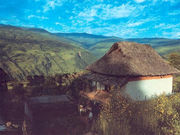


The Kathmandu valley is surrounded by tier of green
mountain walls above, which tower mighty snowcapped
peaks. It consists of three main cities of great
historic and cultural interest: Kathmandu, Lalitpur,
and Bhaktapur. The Kathmandu valley stands at an
elevation of approximately 4,265 ft (1,300 m). It
covers an area of 218 square miles. The population is
approximately 1.5 million.
Kathmandu, the capital of Nepal, is said to be name
after Kasthmandap, an imposing pagoda near Hanuman
Dhoka. The city said to be built in its present form
by Gunakama Dev in 724 A.D.
Kathmandu is located at
27°43′N 85°22′E (27.71667, 85.36667)
Kathmandu is popular as 3 K
Kuta
Khaosan
Kathmandu
Important monuments of Kathmandu valley include
Kathmandu Durbar Square
Patan Durbar Square
Bhaktapur Durbar Square
Changu Narayan
Swayambhunath Stupa
Bouddhanath Stupa
Pashupatinath
Archeological finds within the Kathmandu Valley show
it to have been inhabited as early as 900 BC. It is
noted that the Buddha and his disciples spent some
time in the area where present day Patan is located
within the Kathmandu Valley in the 6th century BC.
Four stupas around the city of Patan erected by Ashoka
the Great, a Mauryan King, in the 3rd century BC
attest to the ancient history present within the
valley. The Kirats are the first documented rulers of
the Kathmandu Valley, the remains of their palace are
said to be in Patan near Hiranyavarna Mahavihara
called "Patukodon". The Licchavi dynasty whose
earliest inscriptions date back to 464 AD were the
next rulers of the valley and had close ties with the
Gupta Dynasty of India. The Malla dynasty ruled
Kathamndu from the twelfth century till the
seventeenth century when the Shah Dynasty under
Prithavi Narayan Shah conqured the valley as he
created present day Nepal. Most of ancient Nepalese
Architecture present in Kathmandu today is from the
Malla era.
According to legend, the area was a lake in the past,
but Manjushri, a disciple of the Shakyamuni Buddha,
cut open a hill to the south and allowed the water to
flow out, making the region habitable. The origin of
the present name is unclear, but one of the more
likely theories is that it was named after
Kastha-Mandap ("temple of wood" in Sanskrit),
after a pagoda carved from the single tree on the
order of King Lakshmi Narasingha Malla in 1596.
mountain walls above, which tower mighty snowcapped
peaks. It consists of three main cities of great
historic and cultural interest: Kathmandu, Lalitpur,
and Bhaktapur. The Kathmandu valley stands at an
elevation of approximately 4,265 ft (1,300 m). It
covers an area of 218 square miles. The population is
approximately 1.5 million.
Kathmandu, the capital of Nepal, is said to be name
after Kasthmandap, an imposing pagoda near Hanuman
Dhoka. The city said to be built in its present form
by Gunakama Dev in 724 A.D.
Kathmandu is located at
27°43′N 85°22′E (27.71667, 85.36667)
Kathmandu is popular as 3 K
Kuta
Khaosan
Kathmandu
Important monuments of Kathmandu valley include
Kathmandu Durbar Square
Patan Durbar Square
Bhaktapur Durbar Square
Changu Narayan
Swayambhunath Stupa
Bouddhanath Stupa
Pashupatinath
Archeological finds within the Kathmandu Valley show
it to have been inhabited as early as 900 BC. It is
noted that the Buddha and his disciples spent some
time in the area where present day Patan is located
within the Kathmandu Valley in the 6th century BC.
Four stupas around the city of Patan erected by Ashoka
the Great, a Mauryan King, in the 3rd century BC
attest to the ancient history present within the
valley. The Kirats are the first documented rulers of
the Kathmandu Valley, the remains of their palace are
said to be in Patan near Hiranyavarna Mahavihara
called "Patukodon". The Licchavi dynasty whose
earliest inscriptions date back to 464 AD were the
next rulers of the valley and had close ties with the
Gupta Dynasty of India. The Malla dynasty ruled
Kathamndu from the twelfth century till the
seventeenth century when the Shah Dynasty under
Prithavi Narayan Shah conqured the valley as he
created present day Nepal. Most of ancient Nepalese
Architecture present in Kathmandu today is from the
Malla era.
According to legend, the area was a lake in the past,
but Manjushri, a disciple of the Shakyamuni Buddha,
cut open a hill to the south and allowed the water to
flow out, making the region habitable. The origin of
the present name is unclear, but one of the more
likely theories is that it was named after
Kastha-Mandap ("temple of wood" in Sanskrit),
after a pagoda carved from the single tree on the
order of King Lakshmi Narasingha Malla in 1596.
|
|
|
|
|
|
|
|
My lonely planet 更新情報
-
最新のイベント
-
まだ何もありません
-
-
最新のアンケート
-
まだ何もありません
-
My lonely planetのメンバーはこんなコミュニティにも参加しています


人気コミュニティランキング

- 1位
- 暮らしを楽しむ
- 77887人

- 2位
- 写真を撮るのが好き
- 209823人

- 3位
- 千葉 ロッテマリーンズ
- 37126人