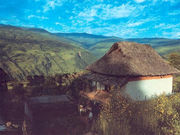


"IN THE THUNDER DRAGON KINGDOM, adorned with sandalwood, the protector who guards the teachings of the dual system; he, the precious and glorious ruler, causes dominion to spread while his unchanging person abides in constancy, as the doctrine of the Buddha flourishes, may the sun of peace and happiness shine on the people." These few words--the text of the national anthem of Bhutan--sum up much about the spirit and culture of a society that sprang from an aboriginal people and was enriched by Tibetan, Mongol, and Indo-Burman migrants. Buddhism has been a pervasive influence in Bhutan throughout most of its history and has long been the state religion and source of civil law. Unified Bhutan has had two forms of monarchy: from the sixteenth century to the early twentieth century, a dual system of shared civil and spiritual rule; and since 1907 the hereditary monarchy of the Wangchuck family.
Once one of the many independent Himalayan kingdoms and principalities, Bhutan, like Nepal, is situated between two Asian powers, India and China, which, at best, have had an uneasy standoff politically and militarily for nearly half a century. Bhutan's independence has long been at issue in the geopolitical maneuverings between Tibet (and later China) and India. In the late twentieth century, Bhutan has fended off this external threat with conscientiously planned economic development. A serious internal threat to Bhutan's traditional identity started peacefully in the 1950s and 1960s among the growing Nepalese minority, which represented 28 percent or more of the population in the early 1990s and emerged as a violent "prodemocracy" movement in the late 1980s. The 1990s promised to be a crucial period for the monarchy as it continued to foster economic and administrative reform amid efforts to retain traditional culture and to assuage minority unrest.
Origins and Early Settlement, A.D. 600-1600
Although knowledge of prehistoric Bhutan has yet to emerge through archaeological study, stone tools and weapons, remnants of large stone structures, and megaliths that may have been used for boundary markers or rituals provide evidence of civilization as early as 2000 B.C. The absence of neolithic mythological legends argues against earlier inhabitation. A more certain prehistoric period has been theorized by historians as that of the state of Lhomon (literally, southern darkness) or Monyul (dark land, a reference to the Monpa aboriginal peoples of Bhutan), possibly a part of Tibet that was then beyond the pale of Buddhist teachings. Monyul is thought to have existed between 500 B.C. and A.D. 600. The names Lhomon Tsendenjong (southern Mon sandalwood country) and Lhomon Khashi (southern Mon country of four approaches), found in ancient Bhutanese and Tibetan chronicles, may also have credence and have been used by some Bhutanese scholars when referring to their homeland. Variations of the Sanskrit words Bhota-ant (end of Bhot, an Indian name for Tibet) or Bhu-uttan (meaning highlands) have been suggested by historians as origins of the name Bhutan, which came into common foreign use in the late nineteenth century and is used in Bhutan only in English-language official correspondence. The traditional name of the country since the seventeenth century has been Drukyul- -country of the Drokpa, the Dragon People, or the Land of the Thunder Dragon--a reference to the country's dominant Buddhist sect.
Some scholars believe that during the early historical period the inhabitants were fierce mountain aborigines, the Monpa, who were of neither the Tibetan or Mongol stock that later overran northern Bhutan. The people of Monyul practiced the shamanistic Bon religion, which emphasized worship of nature and the existence of good and evil spirits. During the latter part of this period, historical legends relate that the mighty king of Monyul invaded a southern region known as the Duars, subduing the regions of modern Assam, West Bengal, and Bihar in India.
Arrival of Buddhism
The introduction of Buddhism occurred in the seventh century A.D., when Tibetan king Srongtsen Gampo (reigned A.D. 627-49), a convert to Buddhism, ordered the construction of two Buddhist temples, at Bumthang in central Bhutan and at Kyichu in the Paro Valley. Buddhism replaced but did not eliminate the Bon religious practices that had also been prevalent in Tibet until the late sixth century. Instead, Buddhism absorbed Bon and its believers. As the country developed in its many fertile valleys, Buddhism matured and became a unifying element. It was Buddhist literature and chronicles that began the recorded history of Bhutan.
In A.D. 747, a Buddhist saint, Padmasambhava (known in Bhutan as Guru Rimpoche and sometimes referred to as the Second Buddha), came to Bhutan from India at the invitation of one of the numerous local kings. After reportedly subduing eight classes of demons and converting the king, Guru Rimpoche moved on to Tibet. Upon his return from Tibet, he oversaw the construction of new monasteries in the Paro Valley and set up his headquarters in Bumthang. According to tradition, he founded the Nyingmapa sect--also known as the "old sect" or Red Hat sect--of Mahayana Buddhism, which became for a time the dominant religion of Bhutan. Guru Rimpoche plays a great historical and religious role as the national patron saint who revealed the tantras--manuals describing forms of devotion to natural energy--to Bhutan. Following the guru's sojourn, Indian influence played a temporary role until increasing Tibetan migrations brought new cultural and religious contributions.
There was no central government during this period. Instead, small independent monarchies began to develop by the early ninth century. Each was ruled by a deb (king), some of whom claimed divine origins. The kingdom of Bumthang was the most prominent among these small entities. At the same time, Tibetan Buddhist monks (lam in Dzongkha, Bhutan's official national language) had firmly rooted their religion and culture in Bhutan, and members of joint Tibetan-Mongol military expeditions settled in fertile valleys. By the eleventh century, all of Bhutan was occupied by Tibetan-Mongol military forces.
Rivalry among the Sects
By the tenth century, Bhutan's political development was heavily influenced by its religious history. Following a period in which Buddhism was in decline in Tibet in the eleventh century, contention among a number of subsects emerged. The Mongol overlords of Tibet and Bhutan patronized a sequence of subsects until their own political decline in the fourteenth century. By that time, the Gelugpa or Yellow Hat school had, after a period of anarchy in Tibet, become a powerful force resulting in the flight to Bhutan of numerous monks of various minor opposing sects. Among these monks was the founder of the Lhapa subsect of the Kargyupa school, to whom is attributed the introduction of strategically built dzong (fortified monasteries). Although the Lhapa subsect had been successfully challenged in the twelfth century by another Kargyupa subsect--the Drukpa--led by Tibetan monk Phajo Drugom Shigpo, it continued to proselytize until the seventeenth century. The Drukpa subsect, an unreformed Nyingmapa group in Tibet, spread throughout Bhutan and eventually became a dominant form of religious practice. Between the twelfth century and the seventeenth century, the two Kargyupa subsects vied with one another from their respective dzong as the older form of Nyingmapa Buddhism was eclipsed.
Once one of the many independent Himalayan kingdoms and principalities, Bhutan, like Nepal, is situated between two Asian powers, India and China, which, at best, have had an uneasy standoff politically and militarily for nearly half a century. Bhutan's independence has long been at issue in the geopolitical maneuverings between Tibet (and later China) and India. In the late twentieth century, Bhutan has fended off this external threat with conscientiously planned economic development. A serious internal threat to Bhutan's traditional identity started peacefully in the 1950s and 1960s among the growing Nepalese minority, which represented 28 percent or more of the population in the early 1990s and emerged as a violent "prodemocracy" movement in the late 1980s. The 1990s promised to be a crucial period for the monarchy as it continued to foster economic and administrative reform amid efforts to retain traditional culture and to assuage minority unrest.
Origins and Early Settlement, A.D. 600-1600
Although knowledge of prehistoric Bhutan has yet to emerge through archaeological study, stone tools and weapons, remnants of large stone structures, and megaliths that may have been used for boundary markers or rituals provide evidence of civilization as early as 2000 B.C. The absence of neolithic mythological legends argues against earlier inhabitation. A more certain prehistoric period has been theorized by historians as that of the state of Lhomon (literally, southern darkness) or Monyul (dark land, a reference to the Monpa aboriginal peoples of Bhutan), possibly a part of Tibet that was then beyond the pale of Buddhist teachings. Monyul is thought to have existed between 500 B.C. and A.D. 600. The names Lhomon Tsendenjong (southern Mon sandalwood country) and Lhomon Khashi (southern Mon country of four approaches), found in ancient Bhutanese and Tibetan chronicles, may also have credence and have been used by some Bhutanese scholars when referring to their homeland. Variations of the Sanskrit words Bhota-ant (end of Bhot, an Indian name for Tibet) or Bhu-uttan (meaning highlands) have been suggested by historians as origins of the name Bhutan, which came into common foreign use in the late nineteenth century and is used in Bhutan only in English-language official correspondence. The traditional name of the country since the seventeenth century has been Drukyul- -country of the Drokpa, the Dragon People, or the Land of the Thunder Dragon--a reference to the country's dominant Buddhist sect.
Some scholars believe that during the early historical period the inhabitants were fierce mountain aborigines, the Monpa, who were of neither the Tibetan or Mongol stock that later overran northern Bhutan. The people of Monyul practiced the shamanistic Bon religion, which emphasized worship of nature and the existence of good and evil spirits. During the latter part of this period, historical legends relate that the mighty king of Monyul invaded a southern region known as the Duars, subduing the regions of modern Assam, West Bengal, and Bihar in India.
Arrival of Buddhism
The introduction of Buddhism occurred in the seventh century A.D., when Tibetan king Srongtsen Gampo (reigned A.D. 627-49), a convert to Buddhism, ordered the construction of two Buddhist temples, at Bumthang in central Bhutan and at Kyichu in the Paro Valley. Buddhism replaced but did not eliminate the Bon religious practices that had also been prevalent in Tibet until the late sixth century. Instead, Buddhism absorbed Bon and its believers. As the country developed in its many fertile valleys, Buddhism matured and became a unifying element. It was Buddhist literature and chronicles that began the recorded history of Bhutan.
In A.D. 747, a Buddhist saint, Padmasambhava (known in Bhutan as Guru Rimpoche and sometimes referred to as the Second Buddha), came to Bhutan from India at the invitation of one of the numerous local kings. After reportedly subduing eight classes of demons and converting the king, Guru Rimpoche moved on to Tibet. Upon his return from Tibet, he oversaw the construction of new monasteries in the Paro Valley and set up his headquarters in Bumthang. According to tradition, he founded the Nyingmapa sect--also known as the "old sect" or Red Hat sect--of Mahayana Buddhism, which became for a time the dominant religion of Bhutan. Guru Rimpoche plays a great historical and religious role as the national patron saint who revealed the tantras--manuals describing forms of devotion to natural energy--to Bhutan. Following the guru's sojourn, Indian influence played a temporary role until increasing Tibetan migrations brought new cultural and religious contributions.
There was no central government during this period. Instead, small independent monarchies began to develop by the early ninth century. Each was ruled by a deb (king), some of whom claimed divine origins. The kingdom of Bumthang was the most prominent among these small entities. At the same time, Tibetan Buddhist monks (lam in Dzongkha, Bhutan's official national language) had firmly rooted their religion and culture in Bhutan, and members of joint Tibetan-Mongol military expeditions settled in fertile valleys. By the eleventh century, all of Bhutan was occupied by Tibetan-Mongol military forces.
Rivalry among the Sects
By the tenth century, Bhutan's political development was heavily influenced by its religious history. Following a period in which Buddhism was in decline in Tibet in the eleventh century, contention among a number of subsects emerged. The Mongol overlords of Tibet and Bhutan patronized a sequence of subsects until their own political decline in the fourteenth century. By that time, the Gelugpa or Yellow Hat school had, after a period of anarchy in Tibet, become a powerful force resulting in the flight to Bhutan of numerous monks of various minor opposing sects. Among these monks was the founder of the Lhapa subsect of the Kargyupa school, to whom is attributed the introduction of strategically built dzong (fortified monasteries). Although the Lhapa subsect had been successfully challenged in the twelfth century by another Kargyupa subsect--the Drukpa--led by Tibetan monk Phajo Drugom Shigpo, it continued to proselytize until the seventeenth century. The Drukpa subsect, an unreformed Nyingmapa group in Tibet, spread throughout Bhutan and eventually became a dominant form of religious practice. Between the twelfth century and the seventeenth century, the two Kargyupa subsects vied with one another from their respective dzong as the older form of Nyingmapa Buddhism was eclipsed.
|
|
|
|
|
|
|
|
My lonely planet 更新情報
-
最新のイベント
-
まだ何もありません
-
-
最新のアンケート
-
まだ何もありません
-