
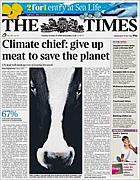


雌牛は、わが子を守ろうとする気持ちがもっとも強い生物のひとつです。
家畜業者が出産と同時に母子を引き離すのは、
そばにいる時間が長いほど母子の愛情が深まるからです。
わが子を取り上げられた母牛が嘆き悲しむ姿や、
子牛の止まない鳴き声は、我々人間にすさまじい印象を残します。
それがきっかけで肉も牛乳も口にしまいと誓った人たちもいます。
また、その強烈な印象から、
しばしばシェイクスピアのような文学や古典にもその描写が見受けられます。
All calves are separated from their mothers on all factory farms.
John Avizienius, the senior scientific officer in the Farm Animals Department of the headquarters of the RSPCA in Great Britain tells me that he remembers one particular cow who appeared to be deeply affected by the separation from her calf for a period of at least six weeks.
When the calf was first removed, she was in acute grief; she stood outside the pen where she had last seen her calf and bellowed for her offspring for hours.
She would only move when forced to do so.
Even after six weeks, the mother would gaze at the pen where she last saw her calf and sometimes wait momentarily outside of the pen.
It was almost as if her spirit had been broken and all she could do was to make token gestures to see if her calf would still be there.
Shakespeare speaks of the plight of the calf in King Henry the Sixth:
Thou never did'st them wrong, nor no man wrong:
And, as the butcher takes away the Calf,
And binds the wretch, and beats it when it strays,
Bearing it to the bloody slaughterhouse;
Even so, remorseless, have they borne him hence:
And, as the Dam runs lowing up and down,
Looking the way her harmless young one went,
And can do naught but wail her darling's loss.
Is Shakespeare's portrayal of the cow wailing the loss of her beloved calf anthropomorphism?
No one who has ever observed it doubts that a cow mourns the loss of her calf.
「The Pig Who Sang to the Moon―The Emotional World of Farm Animals」
Jeffrey Moussaieff Masson著
BALLANTINE BOOKS 2003年出版 140〜141ページ引用
単語の意味などは 薫さんのメルマガ をご参照ください(2010年3月7日第30号)
http://
家畜業者が出産と同時に母子を引き離すのは、
そばにいる時間が長いほど母子の愛情が深まるからです。
わが子を取り上げられた母牛が嘆き悲しむ姿や、
子牛の止まない鳴き声は、我々人間にすさまじい印象を残します。
それがきっかけで肉も牛乳も口にしまいと誓った人たちもいます。
また、その強烈な印象から、
しばしばシェイクスピアのような文学や古典にもその描写が見受けられます。
All calves are separated from their mothers on all factory farms.
John Avizienius, the senior scientific officer in the Farm Animals Department of the headquarters of the RSPCA in Great Britain tells me that he remembers one particular cow who appeared to be deeply affected by the separation from her calf for a period of at least six weeks.
When the calf was first removed, she was in acute grief; she stood outside the pen where she had last seen her calf and bellowed for her offspring for hours.
She would only move when forced to do so.
Even after six weeks, the mother would gaze at the pen where she last saw her calf and sometimes wait momentarily outside of the pen.
It was almost as if her spirit had been broken and all she could do was to make token gestures to see if her calf would still be there.
Shakespeare speaks of the plight of the calf in King Henry the Sixth:
Thou never did'st them wrong, nor no man wrong:
And, as the butcher takes away the Calf,
And binds the wretch, and beats it when it strays,
Bearing it to the bloody slaughterhouse;
Even so, remorseless, have they borne him hence:
And, as the Dam runs lowing up and down,
Looking the way her harmless young one went,
And can do naught but wail her darling's loss.
Is Shakespeare's portrayal of the cow wailing the loss of her beloved calf anthropomorphism?
No one who has ever observed it doubts that a cow mourns the loss of her calf.
「The Pig Who Sang to the Moon―The Emotional World of Farm Animals」
Jeffrey Moussaieff Masson著
BALLANTINE BOOKS 2003年出版 140〜141ページ引用
単語の意味などは 薫さんのメルマガ をご参照ください(2010年3月7日第30号)
http://
|
|
|
|
|
|
|
|
VEGAN TOEIC クラブ 更新情報
-
最新のイベント
-
まだ何もありません
-
-
最新のアンケート
-
まだ何もありません
-
VEGAN TOEIC クラブのメンバーはこんなコミュニティにも参加しています

人気コミュニティランキング

- 1位
- 暮らしを楽しむ
- 77539人

- 2位
- 2026年NHK大河ドラマ 豊臣兄弟!
- 194人

- 3位
- 写真を撮るのが好き
- 209553人