

Hi all,
I'm getting prepared for the JLPT level 3. Overall, I think I've got it nailed, but doing some grammar questions, I realized that on the academic side of Japanese grammar (intricate differences/etc...), I'm completely lost. I've never been to a Japanese class or really used a text book aside from just Kanji books, so I don't know where to start.eally apprecia
Can anyone give a recommendation for a good book about that level that I can use on my own to learn those kinds of grammar intricacies.
I'd be your best friend foreva`-eva`, foreva`-eva`~!!
(^_^)/
I'm getting prepared for the JLPT level 3. Overall, I think I've got it nailed, but doing some grammar questions, I realized that on the academic side of Japanese grammar (intricate differences/etc...), I'm completely lost. I've never been to a Japanese class or really used a text book aside from just Kanji books, so I don't know where to start.eally apprecia
Can anyone give a recommendation for a good book about that level that I can use on my own to learn those kinds of grammar intricacies.
I'd be your best friend foreva`-eva`, foreva`-eva`~!!
(^_^)/
|
|
|
|
コメント(11)
Thanks for all your advice!
I know the days are winding down. To be honest, I'm just taking the JLPT to give me a bit of motivation anyway - don't think it'll do me any good, especially 3 kyuu.
But it's great for stuff like this...I picked out a big weakness, and now I know that I need to do some "sit down with a book" study on that topic, as opposed to the usual sit down over dinner and drinks with Japanese friends and learn as much as I can off them (I live in Tokyo).
I think if I get a good chance to before the test, I'll dig into 'The Preparatory Course for the Japanese Language Proficiency Test' (level 3), and then anytime I get a chance, I'll hit "A Dictionary of Basic Japanese Grammar" -- or at least check them out at the bookstore.
I'll be going after 2/1 kyuu in the next year or two, so I don't plan to stop studying just 'cause the test is over.
I don't have any time right now, but when I get a chance I'll go over that website too.
Thanks for all the advice~!!
I think I have the opposite problem to other learners...many people have all the book grammar down but can't hold a conversation. I just hang out with Japanese people that don't speak English all the time...we communicate, but my grammar is horrific.
ありがとうございます!
I know the days are winding down. To be honest, I'm just taking the JLPT to give me a bit of motivation anyway - don't think it'll do me any good, especially 3 kyuu.
But it's great for stuff like this...I picked out a big weakness, and now I know that I need to do some "sit down with a book" study on that topic, as opposed to the usual sit down over dinner and drinks with Japanese friends and learn as much as I can off them (I live in Tokyo).
I think if I get a good chance to before the test, I'll dig into 'The Preparatory Course for the Japanese Language Proficiency Test' (level 3), and then anytime I get a chance, I'll hit "A Dictionary of Basic Japanese Grammar" -- or at least check them out at the bookstore.
I'll be going after 2/1 kyuu in the next year or two, so I don't plan to stop studying just 'cause the test is over.
I don't have any time right now, but when I get a chance I'll go over that website too.
Thanks for all the advice~!!
I think I have the opposite problem to other learners...many people have all the book grammar down but can't hold a conversation. I just hang out with Japanese people that don't speak English all the time...we communicate, but my grammar is horrific.
ありがとうございます!
There are many excellent books. But since you mentioned JLPT Level 3 in particular, check out this site, which I have been involved with from time to time.
www.jgram.org
It has grammatical lessons that are specifically aligned with the levels of the JLPT, as well as vast other resources, and contines to grow from visitor contributions, rather like Wikipedia.
As far as books go, there is an outstanding grammar by Anthony Alfonso called Japanese Language Patterns. It is now out of print and was published by the outstanding Sophia University (Tokyo). But you can still get it on-line from used book vendors such as abebooks and others. This one is not to be confused with some new titles called something like Japanese Sentence Patterns. The book I have in mind is a two-volume set, each volume is about 500 pages. Fair warning that the Japanese is written all in romaji in the strict linguistic mode ("ti" instead of "chi" for example).
Another excellent grammar, also in Romaji but with available Kanji and Kana supplements that you can use with a friend or tutor, is "Japanese the Spoken Lanuage" by Jorden and Noda. That books is also tracked fairly closely by the web site that MIT provides for free (excluding some special sections only for current students), http://web.mit.edu/21f.500/www/
The book by Jorden and Noda is fairly technical, so be ready for terms like "double-ga affective verbal" but it is an outstanding grammar. For example, these type of books are the only ones I know that explain that a "na adjective" is actually a noun followed by "na" and that "na" is a contraction of "ni aru" meaning "in the state of being" so what we call "kirei na" means "in the state of beauty."
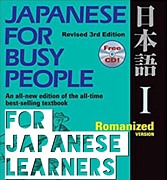
If that level of detail is not your style, there is an approachable series that is more situational/functional called "Japanese for Busy People." But I would caution that such type of book can be very misleading and leads more towards nearly memorizing behaviors rather than providing the real foundation for free expression. But it depends on your style of learning. Good luck!!
www.jgram.org
It has grammatical lessons that are specifically aligned with the levels of the JLPT, as well as vast other resources, and contines to grow from visitor contributions, rather like Wikipedia.
As far as books go, there is an outstanding grammar by Anthony Alfonso called Japanese Language Patterns. It is now out of print and was published by the outstanding Sophia University (Tokyo). But you can still get it on-line from used book vendors such as abebooks and others. This one is not to be confused with some new titles called something like Japanese Sentence Patterns. The book I have in mind is a two-volume set, each volume is about 500 pages. Fair warning that the Japanese is written all in romaji in the strict linguistic mode ("ti" instead of "chi" for example).
Another excellent grammar, also in Romaji but with available Kanji and Kana supplements that you can use with a friend or tutor, is "Japanese the Spoken Lanuage" by Jorden and Noda. That books is also tracked fairly closely by the web site that MIT provides for free (excluding some special sections only for current students), http://web.mit.edu/21f.500/www/
The book by Jorden and Noda is fairly technical, so be ready for terms like "double-ga affective verbal" but it is an outstanding grammar. For example, these type of books are the only ones I know that explain that a "na adjective" is actually a noun followed by "na" and that "na" is a contraction of "ni aru" meaning "in the state of being" so what we call "kirei na" means "in the state of beauty."
If that level of detail is not your style, there is an approachable series that is more situational/functional called "Japanese for Busy People." But I would caution that such type of book can be very misleading and leads more towards nearly memorizing behaviors rather than providing the real foundation for free expression. But it depends on your style of learning. Good luck!!
Oh one last book, if you find yourself with any "dead" time like on the subway, etc., there are quite a few compact-sized books published by Kodansha. It's handy to carry one of those around all the time, because you'd be surprised when you find yourself waiting at a restaurant for 20 minutes or whatever, you can get extra studies throughout the day. That said, one very useful book is called, from memory, "All About Particles" -- it deals with various applications of the small words like "no" "ni" "de" "wo" etc. Those words have basically no meaning out of context, and in various contexts they can have sometimes 10 shades of various meanings. Like the difference in English between "I walked down the street" and "I walked to the street."
I don't know how much you want to spend on books, but if you have trouble in particlar with the difference between "ha" and "ga", the best explanation I know is within the monograph "The Structure of the Japanese Language" by Susumu Kuno. Susumu Kuno is an outstanding linguist at Harvard, and if you can track down his essay called "Japanese: A Characteristic SOV Language" that essay outlines the overall properties of the grammar very well. I happened to track down his e-mail address at Harvard and just asked about it, and he kindly mailed me a photocopy! Everything you are searching for is within your reach. Ganbatte ne!
I don't know how much you want to spend on books, but if you have trouble in particlar with the difference between "ha" and "ga", the best explanation I know is within the monograph "The Structure of the Japanese Language" by Susumu Kuno. Susumu Kuno is an outstanding linguist at Harvard, and if you can track down his essay called "Japanese: A Characteristic SOV Language" that essay outlines the overall properties of the grammar very well. I happened to track down his e-mail address at Harvard and just asked about it, and he kindly mailed me a photocopy! Everything you are searching for is within your reach. Ganbatte ne!
Thanks again for all the info.
I decided to just for the "Dictionary of Basic Japanese Grammar" for now. It fits my study style quite well...just tells me what I need to know specifically without all the word "guide" kind of information most language books have. If there are any language book writers out there, yourselves excluded of course, but I find that most language books are written by people who love to listen to themselves speak a bit too much and have way too much of the author's voice in them for my taste. I don't want someone going on for pages telling me how to study - just give me the answer or ability to find an answer whenever I have a question. This book seems to do that perfectly!
That's a neat story アダムさん. Language experts in general tend to be really helpful, friendly people when they're not writing overly wordy books (笑).
I like the idea of using any spare time to study, but I'm by no means a full-time student, and beyond just having fun talking to Japanese people, I don't have any practical motivation really for learning it...so I use my free time on the train reading English/Japanese mixed versions of Peanuts that I found at a local bookstore.
I pick up massive amounts of vocabulary through stuff like that, and it's fun to notice new grammar patterns that I've learned being used.
Thanks again~ ^_^/
I decided to just for the "Dictionary of Basic Japanese Grammar" for now. It fits my study style quite well...just tells me what I need to know specifically without all the word "guide" kind of information most language books have. If there are any language book writers out there, yourselves excluded of course, but I find that most language books are written by people who love to listen to themselves speak a bit too much and have way too much of the author's voice in them for my taste. I don't want someone going on for pages telling me how to study - just give me the answer or ability to find an answer whenever I have a question. This book seems to do that perfectly!
That's a neat story アダムさん. Language experts in general tend to be really helpful, friendly people when they're not writing overly wordy books (笑).
I like the idea of using any spare time to study, but I'm by no means a full-time student, and beyond just having fun talking to Japanese people, I don't have any practical motivation really for learning it...so I use my free time on the train reading English/Japanese mixed versions of Peanuts that I found at a local bookstore.
I pick up massive amounts of vocabulary through stuff like that, and it's fun to notice new grammar patterns that I've learned being used.
Thanks again~ ^_^/
- mixiユーザー
- ログインしてコメントしよう!
|
|
|
|
☆FOR JAPANESE LEARNERS☆ 更新情報
-
最新のアンケート
-
まだ何もありません
-