
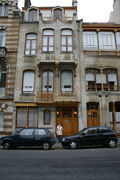


Horta Museum was actually the house that Victor Horta built for himself in the late 1890's.
オルタ美術館は、1890年後半にヴィクトール・オルタ氏が自身の住まい兼アトリエとして建てた。
The Art Nouveau style was popular in Europe, and especially in Brussels, between 1893 and 1918.
所謂、”アールヌーボー(新芸術)”様式は、1983年から1918年にかけて、ブリュッセルを中心に、ヨーロッパ各地に普及した。
The characterizations are: the use of industrial materials like steel and iron in the visible parts of houses, new decorations inspired by nature (e.g. the famous whiplash motive, which occurs very often in the Art Nouveau style and especially in the work of Horta), decorative mosaics or sgraffito on the fa?ades(frontage) of houses, etc...
アールヌーボーの特徴:スチールや鉄のような工業原料を使用した室内装飾、自然を意匠化した新しい装飾(例えば、オルタ氏の作品の中にも見られるアールーヌーボー様式で多々見られるwhiplash motive)、装飾的なモザイクやスグラッフィートの玄関
Most of these principles can be seen applied in the Horta Museum itself.
This house also shows one of the great innovations of Horta: the rooms are built around a central hall. From the beautiful glass ceiling light falls into the house and thereby creating a much more natural illumination of the building than was the case in the traditional late 19th century houses in Brussels and Belgium.
オルタ美術館は、1890年後半にヴィクトール・オルタ氏が自身の住まい兼アトリエとして建てた。
The Art Nouveau style was popular in Europe, and especially in Brussels, between 1893 and 1918.
所謂、”アールヌーボー(新芸術)”様式は、1983年から1918年にかけて、ブリュッセルを中心に、ヨーロッパ各地に普及した。
The characterizations are: the use of industrial materials like steel and iron in the visible parts of houses, new decorations inspired by nature (e.g. the famous whiplash motive, which occurs very often in the Art Nouveau style and especially in the work of Horta), decorative mosaics or sgraffito on the fa?ades(frontage) of houses, etc...
アールヌーボーの特徴:スチールや鉄のような工業原料を使用した室内装飾、自然を意匠化した新しい装飾(例えば、オルタ氏の作品の中にも見られるアールーヌーボー様式で多々見られるwhiplash motive)、装飾的なモザイクやスグラッフィートの玄関
Most of these principles can be seen applied in the Horta Museum itself.
This house also shows one of the great innovations of Horta: the rooms are built around a central hall. From the beautiful glass ceiling light falls into the house and thereby creating a much more natural illumination of the building than was the case in the traditional late 19th century houses in Brussels and Belgium.
|
|
|
|
|
|
|
|
HORTA MUSEUM in Brussels 更新情報
-
最新のイベント
-
まだ何もありません
-
-
最新のアンケート
-
まだ何もありません
-
HORTA MUSEUM in Brusselsのメンバーはこんなコミュニティにも参加しています


人気コミュニティランキング

- 1位
- 30代〜40代から友達作り【友活】
- 35664人

- 2位
- 一行で笑わせろ!
- 83247人

- 3位
- 独り言
- 10138人